
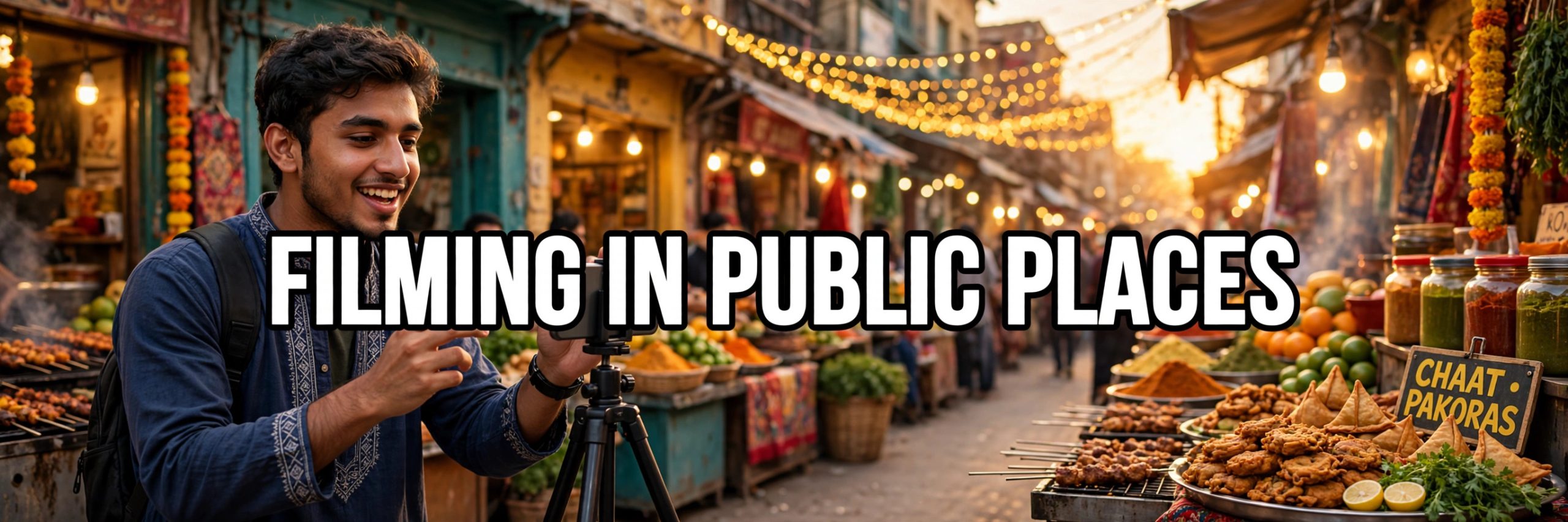
Walk through a busy bazaar in Lahore, a food street in Karachi, or a park in Islamabad on any evening and you will spot the same scene: a young creator holding a phone on a small tripod, recording a video while life carries on around them. The background is not a studio wall. It is real people, real noise, real colour — and that is exactly the point. In 2026, Pakistani creators are filming more in public places than ever before, and audiences are rewarding them for it.
For years, the typical creator video was filmed in a bedroom with a plain wall behind the camera. Public places offer something a bedroom cannot: instant atmosphere. A crowded market, a rainy street, a cricket ground at dusk — these settings tell a story before the creator even says a word. If you want to see which public-place videos are performing best right now, the TikTok video analytics tool on On4t can show you the numbers behind any public video.
Why public places beat the bedroom
The first reason is authenticity. Audiences spot staged videos easily, and a street scene cannot be faked. When a creator tastes gol gappay at a real stall, with the vendor smiling beside them, the video feels honest — and that honesty turns a casual viewer into a regular follower.
The second reason is variety. A creator who films in one room has one background forever; a creator who films outside has a new set every day — a food street, a park, a cricket net, a market. Each location brings its own light, sound and characters, so the content never feels repetitive.
The third reason is discovery. Public places are full of stories waiting to be found — a shopkeeper with a funny way of talking, a street musician, a grandmother selling flowers. Many creators say their best-performing videos were accidents: they went out to film one thing and stumbled on something far better.
The places creators keep returning to
| Place | What works there | Best time to film |
|---|---|---|
| Food streets | Tastings, vendor chats, late-night buzz | Evening, when stalls are busiest |
| Markets and bazaars | Bargaining, colours, crowds, daily life | Morning for calm, evening for energy |
| Parks and open grounds | Dance, fitness, family content, games | Golden hour before sunset |
| Streets and old city lanes | Walks, history, hidden spots, street food | Early morning for empty frames |
| Cricket grounds | Matches, challenges, fan reactions | Weekends and match days |
| Malls and cafes | Hauls, reviews, meet-ups, trends | Weekday afternoons, quieter hours |
Food streets remain the favourite. Lahore’s breakfast lanes and Karachi’s late-night food streets have become regular backdrops for creators who review street food on camera. The food is the excuse; the real content is the atmosphere — the sizzle of the karahi, the vendor calling out orders, the crowd gathering to watch. A video filmed at a stall feels like a small documentary, and viewers love that.
What makes a public video go viral
Location alone is not enough. The videos that travel furthest start with the place, not the creator. The strongest opening seconds show the location first — the smoke rising from a grill, the crowd at a match, the colours of a market — and only then introduce the creator. Viewers decide in the first few seconds whether to keep watching, and a striking place is a better hook than a face talking to a camera.
They also keep it real. The best public videos do not hide the mess: a passing rickshaw, a child waving at the camera, a vendor laughing at a joke. These unplanned moments make a video feel alive, while creators who try to control everything end up with stiff, boring footage.
They respect the moment, too. A quick chat with a shopkeeper works when the creator asks first and keeps it short; a dance in the middle of a crowded footpath does not. The creators who last treat public space as shared space, not as their personal studio.
Finally, they film at the right hour. Early morning gives soft light and empty streets; the hour before sunset gives warm, golden tones; evening brings the crowds and energy that food and market videos need. Smart creators plan around the light, not their free time.
The etiquette every creator should know
Filming in public comes with responsibility. First, ask before featuring a stranger. Someone walking through the background of a shot is normal and usually fine. But making a stranger the subject of a video — their reaction, their outfit, their mistake — without asking is where problems start. If someone asks you to stop filming them or to delete footage of them, do it. No video is worth a confrontation.
Second, remember that cafes, shops, malls and gyms are private property. Many are happy to be featured, but ask the staff before setting up a tripod or filming for more than a quick clip, and follow any no-filming signs. Restaurants usually welcome food reviews if you are quick and do not block other diners.
Third, stay away from sensitive spots. Schools, hospitals, places of worship and government buildings need extra care. Avoid showing children’s faces or anything that reveals where someone lives, and check what is visible behind you: car number plates, house numbers, documents.
Fourth, never film in real time from your own neighbourhood. Post after you have left, and blur or crop landmarks if you film near home regularly. Sharing your exact location while you are still there is a safety risk, especially for creators with a large audience.
Finally, keep it safe. Recent incidents in Pakistan have shown how quickly a careless shoot can turn dangerous — filming near moving traffic, railway tracks, water or animals for a dramatic shot is never worth it.
How to plan a public shoot in one hour
Start by picking one location and one idea — a food street tasting, a market walk, a park dance. One clear idea beats five half-finished ones. Scout the spot first if you can: a quick visit tells you where the light falls, where the crowd gathers, and where you can stand without blocking anyone.
Pack light. A phone, a small tripod and a power bank are enough — big equipment attracts attention and slows you down. Film more than you need, too. Extra shots of the place itself — the street, the stalls, the sky — save a video in editing, covering jump cuts and keeping viewers watching.
Edit the same day if possible. Public videos feel freshest when posted quickly, while the moment is still current. Check your video’s performance after posting to learn what worked: the TikTok video analytics tool on On4t shows which of your public videos held viewers longest, so you can film more of what works and less of what does not.
Mistakes that ruin a good public video
The most common mistake is blocking the way. A creator who sets up in the middle of a footpath will get annoyed looks, not followers — always leave space for people to pass and keep your setup small. The second mistake is filming too long in one spot. A market is interesting for a minute; the same stall for five minutes is not. Move around and change angles.
The third mistake is ignoring sound. Public places are noisy, and that noise is part of the charm — but wind hitting the microphone can ruin a clip, so use a cheap wind cover or film with your back to the wind. The fourth mistake is forgetting the people who made the video possible. A vendor who gave you a great clip deserves a thank you and a mention; creators who build good relationships get invited back.
Why this trend is here to stay
Public filming is not a passing fad. It fits how audiences watch now: they want real places, real people and real moments, not polished studio content. It also fits how creators work now: a phone and a street are enough to start, with no studio rent and no crew. For new creators, the street is the cheapest studio in the world — and for established creators, it is the fastest way to show their audience something they have not seen before.
Pakistani cities make this trend even stronger. Few places offer so much colour in one frame: a food street at night, a cricket match in a park, a bazaar at dawn. Creators who film these places well are showing the world what daily life in Pakistan actually looks like — content no studio can copy.
FAQs
Is it legal to film in a public place in Pakistan?
Filming in genuinely public spaces like streets and parks is generally acceptable, but malls, cafes and shops can set their own rules, and you should always ask before featuring an identifiable person. If someone objects, stop and delete the footage.
Do I need permission to film at a food street or market?
For a quick clip while walking through, usually not. For a longer shoot with a tripod, or a specific vendor’s stall, ask the vendor first — most are happy to be featured when you are polite and quick.
What is the best time to film outdoors?
Early morning for soft light and empty streets, the hour before sunset for warm golden tones, and evening for the energy of food streets and markets. Avoid harsh midday sun.
How do I handle people who walk into my shot?
Let them pass and keep filming. Background passers-by are a normal part of public filming. Only stop if someone is clearly upset or asks you to delete footage of them — then do it without arguing.
Can I film children in public places?
Be very careful. Avoid filming children who are not your own, never show a child’s face in a way that identifies them, and never film near schools. If a child appears by accident, crop or blur them out before posting.
How do I keep my location private while filming outside?
Post after you have left, avoid filming street signs or house numbers near your home, and never share your live location. If you film in your own neighbourhood regularly, blur recognisable landmarks.
The bottom line
Pakistani creators are stepping out of their rooms and into their cities, and audiences are following them. Public places give videos colour, energy and honesty that no studio can match — and they cost nothing to use. The creators who do it best pick one clear idea, film at the right hour, ask before featuring people, keep their setup small, and never put a dramatic shot ahead of safety. Start with the street outside your door, film what is real, and let the place do half the work.
On4t is not affiliated with or endorsed by TikTok.