
Scroll through TikTok in Pakistan today and you will notice something unexpected: alongside the latest dance trends and comedy skits, clips from dramas that aired years ago are filling the feed. A tearful scene from Humsafar, a sharp exchange from Zindagi Gulzar Hai, a quiet moment from Dastaan — each one paired with a creator’s face in the corner, reacting in real time. Old Pakistani dramas have become one of the most reliable formats for reaction videos in 2026, and the trend keeps growing because it gives creators something new content often cannot: an audience that already cares before the video even starts.
Reaction videos are not new, but the material has changed. Creators used to react to new trailers, new songs and new viral moments. Now many of the most-watched reaction clips in Pakistan are built around scenes that first aired a decade or more ago. The answer sits at the intersection of nostalgia, storytelling and the way TikTok’s feed actually works. If you want to see which of these clips are actually landing with viewers, a quick check with the TikTok Video Analytics Checker shows how a single old scene can outperform a brand-new upload.
The dramas fuelling the trend
| Classic drama | Why it works for reactions | What creators react to most |
|---|---|---|
| Humsafar | The benchmark for emotional acting | The car scene, the confrontations, the ending |
| Zindagi Gulzar Hai | Sharp dialogue that still sparks debate | Kashaf and Zaroon’s arguments and turning points |
| Dastaan | Period storytelling with heavy emotional weight | Partition-era scenes and the lead pair’s chemistry |
| Parizaad | A slow-burn story with a huge payoff | Parizaad’s transformation and his quietest scenes |
| Ehd-e-Wafa | Friendship and patriotism in one package | The group’s reunion moments and the finale |
| Dhoop Kinare | The original comfort drama | Gentle humour and the lead pair’s early scenes |
| Mere Paas Tum Ho | A story everyone has an opinion on | The most quoted lines and the ending |
| Yakeen Ka Safar | Strong characters and a memorable arc | Zubia’s journey and the hospital scenes |
Nostalgia is the strongest hook on the feed
The first reason old dramas work so well is simple: nostalgia is a hook that needs no introduction. When a creator posts a clip from a current show, viewers need a reason to stop scrolling. When the clip is from Humsafar, the reason is already there. Millions of people watched these dramas with their families, often at the same time every evening, and the scenes carry years of personal memory. A single frame can remind someone of their childhood living room, of watching with a parent, of the first time a story made them cry.
Creators who film reactions to old dramas are not just reacting to a scene. They are reacting to a shared memory, and the audience reacts along with them. The comments become a reunion: people naming their favourite episode, arguing about which drama was better, sharing how many times they rewatched a series. That is the kind of engagement the algorithm rewards, because people do not just watch — they stay, they comment, they save the clip to show someone else.
The scenes were built to be clipped
Pakistani dramas from the 2010s were written in a way that suits short video almost by accident. The stories moved slowly, but the turning points were explosive: a single line of dialogue that changed everything, a look that lasted three seconds too long, a confrontation that viewers still quote years later. Those moments work perfectly as standalone clips because they carry their own drama. You do not need to know the whole plot to feel the scene.
That matters on TikTok, where a clip has a few seconds to earn a viewer’s attention. A reaction creator can take a two-minute scene, cut it to the thirty seconds that matter, and let their own face do the rest. The best reaction videos in this format are not the ones with the longest commentary. They are the ones where the creator lets the scene breathe and reacts honestly.
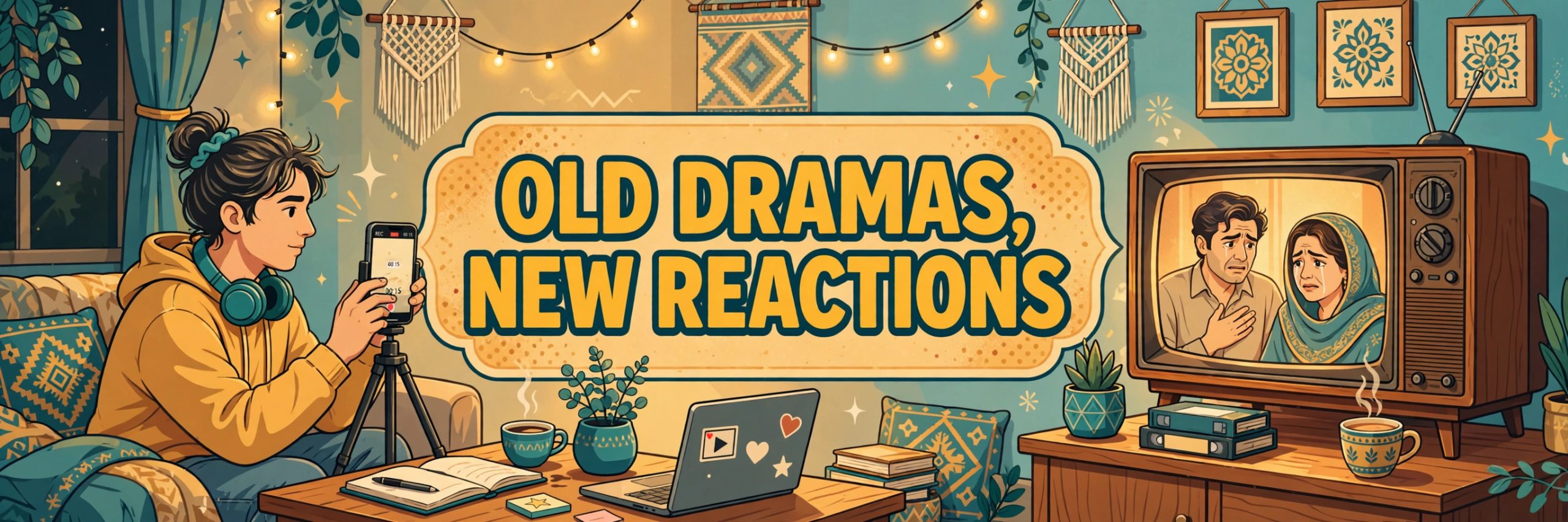
Young viewers are discovering the classics for the first time
There is a second audience driving this trend: viewers who never watched these dramas when they first aired. For a teenager in 2026, Humsafar is not a memory — it is a discovery. Reaction videos are their way in. A creator’s shocked face, a caption that says “wait, what just happened”, a comment section full of people explaining the backstory — all of it turns an old drama into a new experience.
This is the same pattern that has revived old shows around the world. A clip from a series that ended years ago resurfaces, a new audience finds it through a reaction or a fan edit, and suddenly a show with no marketing budget is trending again. In Pakistan, that cycle is especially strong because the stories — family, love, betrayal, sacrifice — are timeless.
Reaction videos are cheap to make and easy to repeat
From a creator’s point of view, old-drama reactions are one of the most practical formats on TikTok. There is no script to write, no location to book, no outfit change, no collaborator to schedule. The creator needs a phone, a clip and a genuine reaction. A single episode can supply a dozen reaction videos, each built around a different scene.
It also lowers the barrier for new creators. Someone who has never made a video before can start by reacting to a scene they love, because the passion is already there. The most successful reaction creators in this space are fans first. They know the dialogues by heart, they have opinions about the characters, and their viewers trust them because of it.
What the best reaction creators do differently
Not every old-drama reaction video works. The ones that do share a few habits. First, they pick scenes with a clear emotional peak — a revelation, a goodbye, a line that viewers still quote. A flat scene with no turning point rarely holds attention, no matter how popular the drama is. Second, they keep their own commentary short. The audience came for the drama, not for a lecture, and the best creators know when to stay quiet and let the scene play. Third, they add context that new viewers need: one line about who the characters are, or what happened just before the scene, is often enough.
Fourth, they respect the material. Reaction videos that mock a classic drama tend to lose the very audience they need, because that audience loves the show. And finally, they pay attention to what their own audience responds to. If a Humsafar clip outperforms a clip from another drama, they film more of what works.
The comment section is half the content
Ask any creator who films old-drama reactions what makes the format special and most will point to the comments. A reaction video to a classic drama does not end when the video ends. The comments become a second show: people debating whether a character made the right choice, sharing the year they first watched the drama, recommending another classic, and tagging friends who need to watch it.
Smart creators treat the comment section as their content calendar. A viewer who says “now react to the ending of Dastaan” has just handed the creator their next video idea. A debate about which drama had the better ending becomes a poll, then a video, then a series. The format feeds itself, and it keeps the creator close to their audience in a way that scripted content rarely does.
Why this trend is not fading soon
Some trends burn out in weeks. Old-drama reactions have the opposite shape, because the supply of material is enormous and the audience keeps renewing itself. There are decades of Pakistani dramas to draw from, from the PTV classics of the 1980s to the Hum TV hits of the 2010s, and every year a new group of viewers reaches the age where they discover them.
The format is also steady in a way that many viral trends are not. It does not depend on a controversial moment, a prank or a risky stunt. It is built on stories people already love, and on the honest pleasure of watching someone else love them too. That makes it a good long-term format for creators who want steady growth rather than a single viral spike.
Lessons for creators who want to try it
If you want to make reaction videos to old Pakistani dramas, start with a drama you genuinely love, not the one that looks most popular. Your real enthusiasm is what the camera catches. Pick a scene with a clear emotional peak and keep the clip short — the first few seconds decide whether someone stays. Add one line of context for viewers who have never seen the show, then let the scene do the talking.
Respect the source material and the people who made it. These dramas are part of Pakistan’s cultural memory, and the audience that loves them will notice if you treat them carelessly. Credit the drama in your caption, keep your commentary kind, and remember that the best reaction videos are conversations with the audience, not performances for them.
FAQs
Why are old Pakistani dramas trending on TikTok in 2026?
Old dramas carry nostalgia for viewers who watched them years ago, and they are being discovered by younger viewers through reaction videos and clips. Their most emotional scenes work well as short videos, and the comment sections turn each clip into a conversation.
Which old Pakistani dramas get the most reaction videos?
Humsafar and Zindagi Gulzar Hai are the most common, followed by Dastaan, Parizaad, Ehd-e-Wafa, Dhoop Kinare, Mere Paas Tum Ho and Yakeen Ka Safar. Creators tend to return to the dramas with the most quoted scenes and the strongest fan communities.
Do I need to have watched the whole drama to react to it?
It helps a lot. Viewers can tell when a creator knows the story and when they are guessing. If you have not seen the full drama, watch the key episodes first so your reactions feel honest.
How long should an old-drama reaction video be?
Short works best. Most successful reaction clips focus on a single scene and keep the total video tight, so viewers watch it through. A long clip with a slow build often loses people before the moment that matters.
Can new creators grow with old-drama reaction videos?
Yes, and many have. The format needs little equipment and no script, so a new creator can start with a scene they love. Growth comes from consistency, honest reactions and replying to the comments that suggest the next scene.
Is it okay to use clips from old dramas in reaction videos?
Use short clips, add your own commentary and reaction, and credit the drama in your caption. Keep the focus on your reaction rather than re-uploading long scenes, and respect the work of the writers, actors and channels behind the original shows.
What makes one reaction video perform better than another?
The scene choice matters most: a clip with a clear emotional peak holds viewers longer. After that, honest reactions, a short caption with the drama’s name, and an active comment section all help a video reach more people.
Conclusion
Old Pakistani dramas are taking over TikTok reaction videos because they offer what new content often cannot: stories the audience already loves, scenes built to be clipped, and a comment section that feels like a family gathering. The trend works for viewers who want to relive a favourite show, for young fans discovering the classics for the first time, and for creators who want a format that is simple to make and easy to sustain.
If you are a creator looking for your next format, the classics are waiting. Pick a drama you love, find the scene that still gives you goosebumps, and film your honest reaction to it. Then check how it performed and refine the next one — the TikTok Video Analytics Checker can show you which of your clips held viewers longest, so each reaction gets a little sharper. The dramas have already done the hard part. Your job is simply to love them out loud.
On4t is not affiliated with or endorsed by TikTok.