
Scroll through any Pakistani creator’s feed today and something feels different. The skin looks like skin. The rooms look lived in. A few years ago, every other video opened with a face smoothed into porcelain and a background blurred into a dream. Now the most watched creators in Pakistan are posting messy mornings, unedited rants and behind-the-scenes clips that look like they were shot in one take — because they were. So here is the question everyone is quietly asking: do Pakistani creators still use filters in 2026, or has the filter era finally ended?
The honest answer is both simpler and more interesting than a yes or no. Filters have not disappeared. They have changed shape, shrunk in strength, and moved into the background — while the creators who win the most trust are the ones who use them least visibly. If you want to know which of your own videos are actually landing, check any TikTok video’s analytics and compare a heavily filtered upload with a raw one. The numbers usually tell the story faster than any debate can.
The short answer: yes, but not the way they used to
Almost every creator still touches up a video before posting. What changed is what “touching up” means. In the early days of TikTok and Instagram, filters were the whole look — reshaped faces, enlarged eyes, airbrushed skin. In 2026, the dominant style is what editors call elegant realism: a little warmth, a little brightness, skin texture left intact, proportions untouched. The filter is there, but you are not supposed to notice it.
Talk to any working creator and you will hear the same practical logic. A filter that smooths away a bad-light day is a tool. A filter that changes what you look like is a risk. Audiences have learned to spot the difference in a second, and they punish the second kind with unfollows and sceptical comments. The first kind just makes a video easier to watch.
What changed in 2026: the authenticity turn
The biggest shift did not come from creators at all. It came from the platforms and the audience at the same time. TikTok’s own trend reporting for 2026 describes a clear pivot away from glossy, aspirational content toward raw, real and unfiltered human stories. The platform calls it messy authenticity: viewers rewarding content that feels lived in, slightly imperfect and emotionally honest, instead of content that looks like an advertisement for a life nobody actually lives.
There is also a practical reason the change stuck: trust has become the currency that matters. When every post looks heavily altered, viewers start to doubt everything else the creator says, including product recommendations. Creators who show their real skin and their real bad days earn credibility that no filter can manufacture — and in a market where brand deals follow trust, that credibility is worth real money.
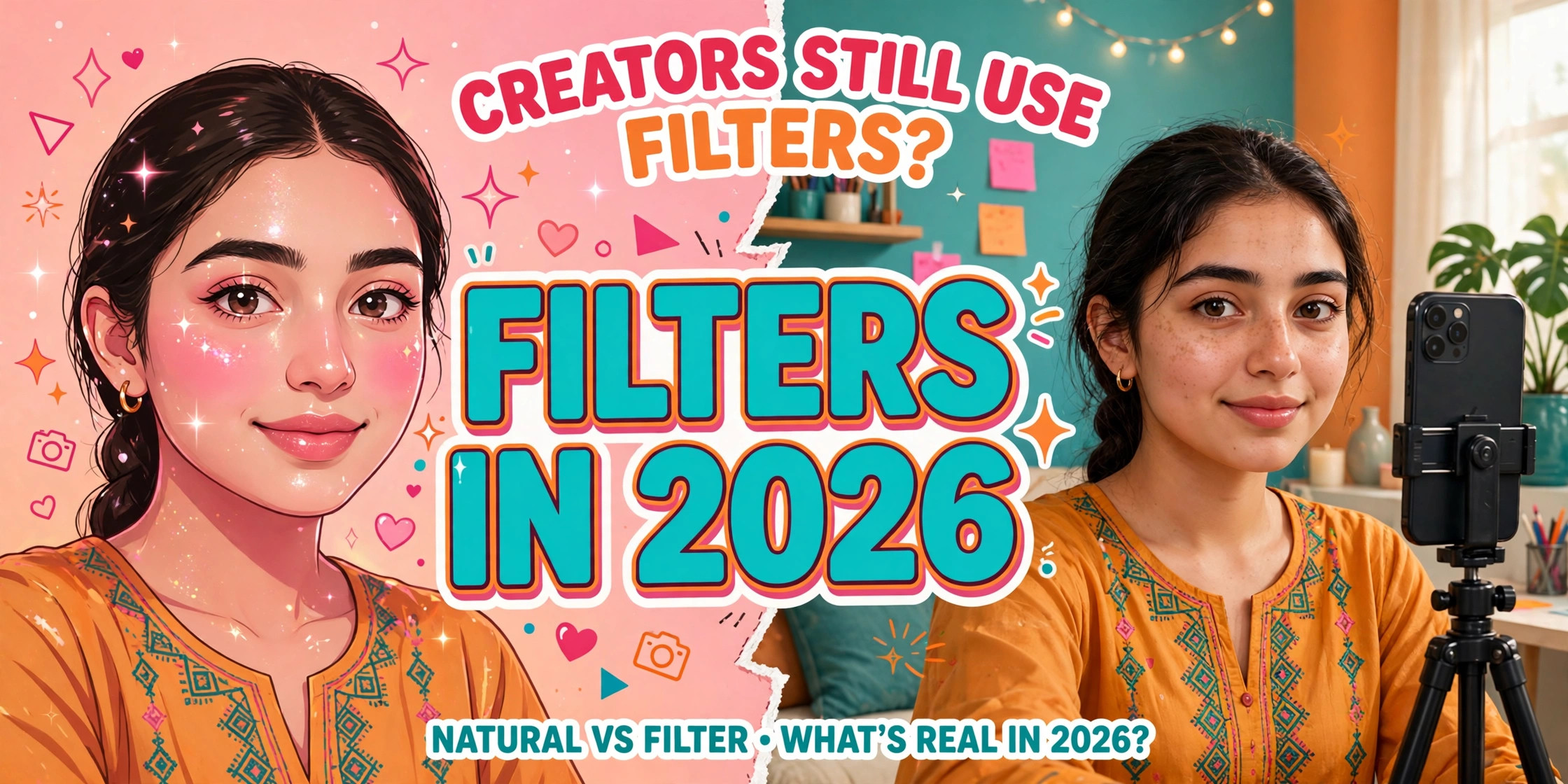
The filters that disappeared — and the ones that stayed
Not every filter survived the turn. The most dramatic change came from Instagram and Facebook, where Meta shut down its Meta Spark platform for third-party filters in early 2025. The deep library of creator-made beauty effects that many Pakistani creators relied on simply vanished overnight. Meta’s own built-in effects continued, but the wild variety of face-changing lenses was gone, and many creators never bothered to replace them.
TikTok moved in the same direction from a different angle. The platform restricted certain appearance effects for younger users and now requires clear labelling when AI or heavy editing is used to realistically depict people or scenes. A little skin smoothing sits far from that line. Changing what someone looks like does not. The message to creators is consistent across platforms: enhance, do not deceive.
So which filters are Pakistani creators actually still using in 2026? Here is the honest breakdown.
| Filter type | Still used in 2026? | Why |
|---|---|---|
| Light colour and warmth grades | Yes, widely | Makes footage look clean without changing faces |
| Soft skin smoothing at low strength | Yes, quietly | Fixes harsh light; invisible when kept subtle |
| Retro and film-style looks | Yes, growing | Adds mood and personality without touching features |
| Face-reshaping beauty filters | Fading fast | Audiences spot them instantly and trust drops |
| Heavy AI face-changing effects | Rarely, and risky | Platforms now require labels; viewers call it out |
| Fun and novelty lenses | Yes, for comedy | Clearly playful, nobody mistakes them for reality |
| No filter at all | Yes, and rising | The strongest trust signal a creator can send |
Why the big names went lighter
Watch the creators with the most loyal audiences and a pattern appears. Their most watched videos are rarely their most polished ones. A fashion creator’s try-on in natural light outperforms her studio shoot. A food creator’s shaky one-take kitchen video gets more saves than a colour-graded production. A vlogger’s unfiltered morning routine gets more comments than any planned video of the week.
People follow people, not mannequins. When a creator shows up looking like themselves — same skin, same room, same imperfect hair — viewers feel like they know a real person. That feeling turns a casual viewer into a follower, and a follower into someone who watches every upload and shows up for a live stream. Heavy filters break that feeling, because the person on screen stops matching the person viewers imagine.
The other side: filters are not going away
None of this means filters are dead, and anyone who says so is selling you something. Filters still do real, honest work for creators. Good lighting is not always available. A phone camera in a dim room flattens faces and washes out colour, and a gentle grade fixes that without lying about anything. A comedy creator’s best sketch might depend on a silly lens. These are legitimate uses, and they are not going anywhere.
The honest line creators draw in 2026 is between enhancement and alteration. Enhancement is lighting, colour, a little smoothing, a film look — the digital equivalent of good makeup and a good lamp. Alteration is a different nose, a different jawline, a different body. The first helps viewers see you better. The second shows them someone who is not you. Brand work makes the line even sharper: advertising watchdogs have already ruled against influencer ads where filters exaggerated what a product could do. A filter that makes a cream look like it transformed skin overnight is not a creative choice; it is a misleading claim.
What this means if you are a small creator
If you are starting out, the filter question is really a strategy question, and the answer is refreshingly cheap: you do not need a filter at all to grow. Some of the fastest-growing Pakistani creators in 2026 film with a phone, a window and nothing else. What they have instead is consistency, a clear niche and a voice that sounds like a real person talking to a friend.
That does not mean you should never touch a filter. It means you should choose one on purpose, use it at low strength, and use the same look across your videos so your feed feels like you. Test your choices the way professionals do: post the same idea twice, once lightly filtered and once raw, and watch which one earns more watch time, saves and comments. And keep one rule that never changes: if a filter changes how your face or body looks, say so — or better, skip it. The creators who last are the ones whose audience would recognise them on the street.
The honest answer, in one paragraph
Pakistani creators still use filters in 2026, but the heavy, face-changing filter era is over. What remains is a lighter toolkit: colour grades, soft smoothing, retro looks and the occasional playful lens — used at low strength, in service of the video, not in place of the person. The creators winning the most loyalty treat filters like seasoning, not the meal. The audience has voted with its attention: show us something real, and we will stay.
FAQs
Do Pakistani creators still use filters in 2026?
Yes, most still use light filters such as colour grades and soft smoothing. Heavy face-reshaping filters have faded because audiences spot them quickly and trust drops when a creator looks different in every video.
Why are so many creators posting without filters now?
Platforms and audiences both moved toward authenticity in 2026. Raw, unedited content earns more trust and more loyal followers, and creators say dropping the perfect look is also far less exhausting to maintain every day.
Which filters are still popular with Pakistani creators?
Light colour and warmth grades, soft skin smoothing at low strength, retro and film-style looks, and fun novelty lenses for comedy. Face-reshaping beauty filters and heavy AI face-changing effects are falling out of use.
Did Instagram remove filters?
Instagram and Facebook lost their large library of third-party creator-made filters when Meta shut down the Meta Spark platform in early 2025. Meta’s own built-in effects continued, but many creators never replaced the custom filters they had relied on.
Should a new creator use filters to grow faster?
No filter will grow an account on its own. Consistency, a clear niche, good ideas and honest presentation matter far more. If you use a filter, keep it subtle and consistent, and test filtered and unfiltered versions to see what your own audience prefers.
How can I tell if a filter is hurting my videos?
Compare your own uploads. Post similar videos with and without a heavy filter, then look at watch time, saves and comments rather than likes alone. If the raw version holds viewers longer, your audience is telling you they prefer the real you.
Filters are a tool, not a personality. Use them lightly, use them honestly, and let your content do the talking. If you want to see which style your audience actually rewards, check any TikTok video’s analytics and let the watch time decide. The creators who last are not the ones with the smoothest skin on screen. They are the ones viewers would still recognise — and still trust — with the filter switched off.
On4t is not affiliated with or endorsed by TikTok. Use filters and editing tools responsibly, and always label AI-generated or heavily edited content when a platform asks you to.