
Imagine opening TikTok and finding a video of yourself saying things you never said, in a voice that sounds almost exactly like yours. Fake videos made with artificial intelligence have become one of the biggest worries for creators, and this week TikTok answered with a new safety feature that could change how creators protect their face and voice online.
On 19 November 2026, TikTok announced Likeness Detection, a new opt-in tool that helps eligible creators find and flag AI-generated content that uses their likeness without their permission. The announcement came at the platform’s Safety and Innovation Summit in London. Alongside it, TikTok released a second tool that anyone can use to check whether a photo or video was made or edited with TikTok’s own AI features.
For Pakistani creators, whose faces and voices are their brand, this matters a lot. A single fake clip can confuse fans and damage trust built over years. This post explains what the new tools do, who can use them, and what creators in Pakistan should do right now while the rollout is still gradual. If you work with your voice online, you can also explore On4t AI Voices to create original voiceovers for your own content in a responsible way.
What Is TikTok Likeness Detection?
Likeness Detection is TikTok’s new way of helping creators spot AI-made copies of themselves. It watches for content on TikTok that appears to use your face or voice without your consent, and it lets you flag that content for review.
TikTok describes it as an opt-in tool, which means creators choose to join it rather than being added automatically. It is aimed first at eligible creators and public figures, including politicians and accounts with large followings. The idea is straightforward: your likeness belongs to you, and you should have a direct way to act when someone else uses it without asking. The platform has required creators to label realistic AI-generated images, audio and video for several years, and Likeness Detection gives creators a more direct way to find and act on fake content themselves.
How Likeness Detection Works in Three Steps
TikTok says the tool works in three simple steps, each designed to be quick so creators can protect themselves without spending hours on reports.
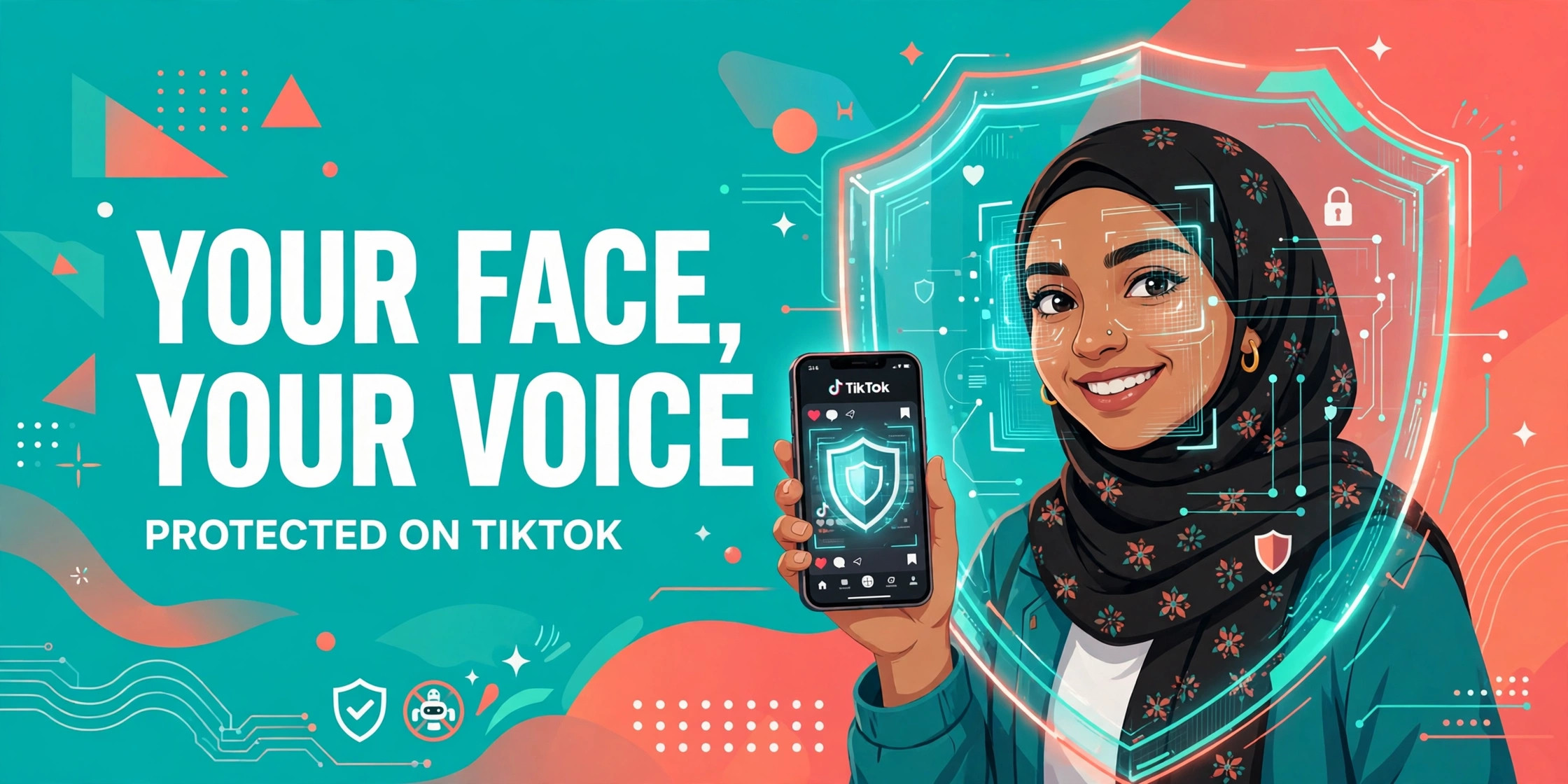
Step one: sign up and verify your identity. Eligible creators register and verify who they are through a trusted third-party partner. TikTok says it does not keep the identity documents used for this check.
Step two: get notified about possible matches. Once you are signed up, TikTok alerts you when it finds content or accounts that may be using your likeness, and you can review those matches inside the tool.
Step three: report what breaks the rules. From inside the tool, you can report suspected AI-generated content directly to TikTok’s safety team. Content that violates the platform’s rules against harmful, misleading or non-consensual depictions of real people will be removed.
One honest note: TikTok has not yet published a full list of who counts as eligible, and it has not given dates for when the tool reaches every country. The rollout is gradual, so many creators will need to wait before they can sign up. That waiting period is still useful, because the steps below will help you prepare.
The Second Tool: A Public Checker Anyone Can Use
Alongside Likeness Detection, TikTok released a second tool that works very differently. This one is a public checker that anyone can use, with or without a TikTok account, to test whether an image or video was made or edited with TikTok’s own AI creation features.
You upload a file to the checker, and it looks for two signals. The first is C2PA Content Credentials, a widely used standard that records how a piece of media was created or changed. The second is VeraDura, TikTok’s own invisible watermark, which marks content made with its AI tools.
Unlike Likeness Detection, the checker is live now for everyone. That makes it the tool most creators will actually use today. If a fan sends you a suspicious clip of yourself, or if you want to check a video before sharing it, the checker gives you a quick answer about one file in front of you.
Why This Matters for Pakistani Creators
Pakistani creators face this problem more than most. Many of the country’s biggest TikTokers, YouTubers and Instagram creators have large audiences, and their faces and voices are instantly recognisable. That popularity makes them easy targets for fake clips, copied voices and misleading edits.
Fake content hurts creators in three ways. First, it confuses fans, who may believe a fake video is real. Second, it can damage deals with brands, because a brand does not want its name near a fake clip. Third, it steals the creator’s own work, because a copied voice or face is being used to attract views that should belong to the original creator. Many Pakistani creators also use AI voices and voiceovers in their own videos, for dubbing, storytelling and narration. That is a creative and honest use of the technology. The problem starts when someone else’s voice is copied without permission, and tools like Likeness Detection draw a clear line between those two uses.
What Creators Should Do Right Now
Even if Likeness Detection has not reached your account yet, there is plenty you can do today. These steps cost nothing and they protect your name while the rollout continues.
Label your own AI content clearly. If you use AI voices, AI images or AI editing in a video, say so in the video or the caption. Honest labelling builds trust with your audience.
Use the public checker on suspicious clips. When you see a video of yourself that you did not make, run it through TikTok’s checker. Save the result as a screenshot, because it can help if you later need to report the clip.
Report fake content through the proper channels. Anyone, whether or not they use TikTok, can report non-consensual AI-generated content through TikTok’s privacy reporting form. A formal report reaches the team that can actually remove the clip.
Keep your original files safe. Save your original recordings, scripts and project files. If someone copies your voice or face, your originals are proof of what you actually made and when you made it. A short video telling fans that fake clips of you exist, and that you will never ask them for money or passwords through a video, can protect your community too.
Use AI voices the right way. If you need a voiceover and cannot record, use a licensed voice library instead of copying a real person’s voice. On4t AI Voices lets you pick a voice, enter your script and generate clean audio for your videos, so your content stays original and honest.
What TikTok Has Not Said Yet
Good reporting means being honest about the gaps, and there are a few here. TikTok has not said which accounts qualify as eligible, how large an account must be, or when creators in Pakistan will get access. It has also not explained what happens to flagged content that does not clearly break the platform’s rules. That is normal for a gradual rollout, but it means creators should not wait for the tool to solve the problem on its own. The habits above work today, with or without Likeness Detection.
Lessons for Creators From This Launch
Every platform change teaches creators something, and this one teaches a few clear lessons. The first is that your face and voice are assets, just like your videos. Protect them the way you protect your account password. The second lesson is that transparency wins: creators who label their AI content and talk openly about how they make videos earn more trust, not less. The third lesson is that speed matters. A fake clip spreads fast, so the sooner you spot it and report it, the less damage it does. Your audience follows you because they trust you, and protecting that trust is the most valuable work you do.
Frequently Asked Questions
What is TikTok Likeness Detection?
It is a new opt-in tool announced on 19 November 2026 that helps eligible creators find and flag AI-generated content on TikTok that may use their likeness without their consent.
Who can use Likeness Detection?
It is aimed at eligible creators and public figures, including politicians and accounts with large followings. TikTok has not yet published the full eligibility criteria, and access is rolling out gradually.
How does Likeness Detection work?
In three steps: sign up and verify your identity with a trusted third-party partner, get notified when TikTok finds possible matches, then review and report the content inside the tool.
What is TikTok’s public AI checker?
It is a free tool anyone can use, with no TikTok account needed, to check whether an image or video was made or edited with TikTok’s AI features.
Is Likeness Detection available in Pakistan yet?
TikTok has not given country-by-country dates, so there is no confirmed date for Pakistan. The rollout is gradual, and creators can use the public checker and the privacy reporting form right now.
What should I do if I find a fake video of myself?
Save the link and a screenshot, run the file through the public checker if you can, and report it through TikTok’s privacy reporting form. Tell your audience the clip is fake so your fans do not get misled.
Fake videos and copied voices are a real problem for creators, but they are no longer a problem without an answer. TikTok’s Likeness Detection and its public AI checker give creators new ways to protect their face, their voice and their name. The rollout will take time, and the eligibility rules are still unclear, but the direction is clear: platforms are finally giving creators tools to fight back. Start with what you can do today. Label your AI content, check suspicious clips, keep your originals safe and talk to your audience. Your likeness is part of your brand, and protecting it is part of your job as a creator. On4t is not affiliated with or endorsed by TikTok.