
Every creator you admire on TikTok once stared at a blank screen and wondered whether anyone would ever watch. The difference between the creators who are still posting today and the ones who disappeared is rarely talent. It is the first hundred videos. Most people quit before ten. The ones who push through to a hundred learn things no course can teach, and their content quietly transforms along the way. Before you film your next video, it helps to know what your uploads are actually doing, and a free TikTok video analytics check can show you which of your videos hold attention and which ones viewers skip.
The First 100 Videos, at a Glance
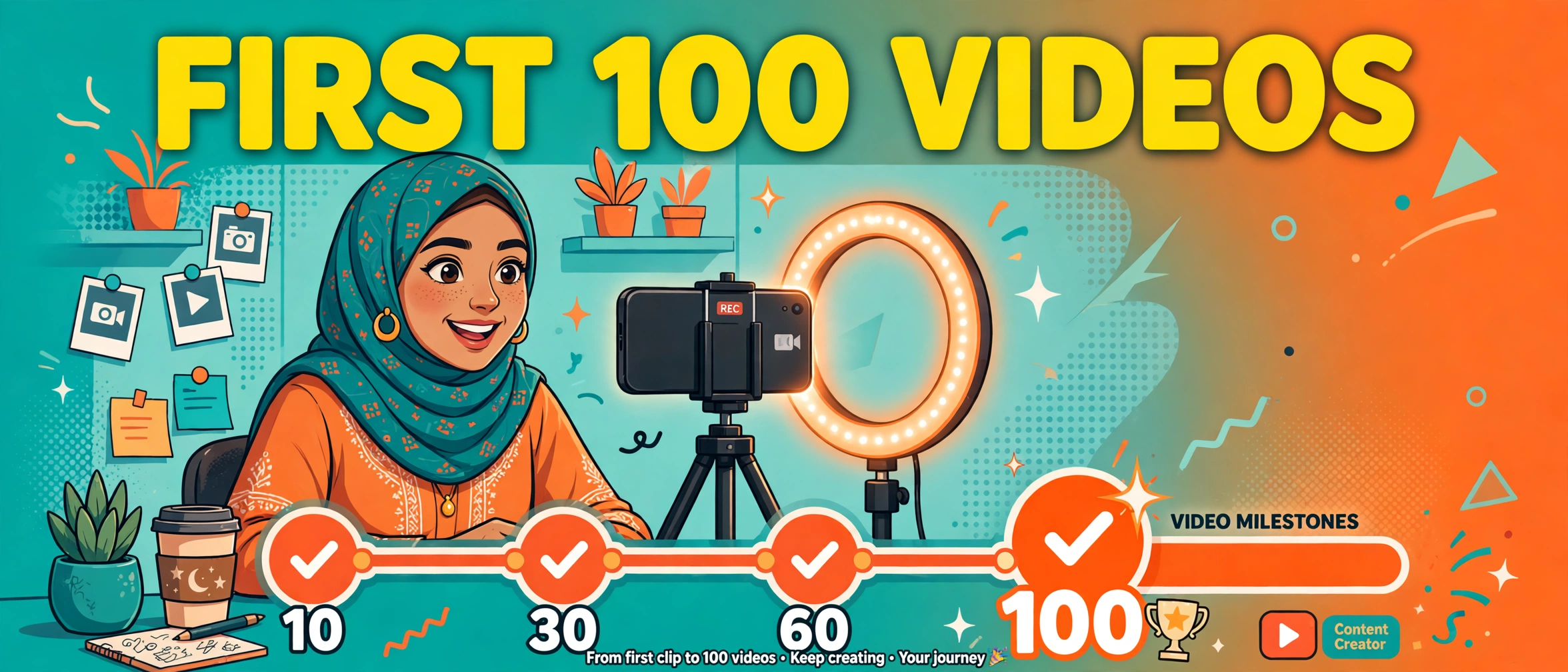
| Stage | What It Feels Like | What to Focus On |
|---|---|---|
| Videos 1–10 | Awkward, slow, almost no views | Just finishing and posting |
| Videos 11–30 | Small wins, first comments | Finding your topic and style |
| Videos 31–60 | Real momentum, real feedback | Doubling down on what works |
| Videos 61–100 | Confidence, consistency, identity | Systems, series and collaborations |
Why the First 10 Videos Feel the Hardest
The first ten videos are the hardest because you are doing everything for the first time at once. You are learning how to talk to a camera, how to frame a shot, how to cut a clip, how to write a caption, and how to pick a sound, all while wondering if anyone is watching. Of course it feels slow. A single video can take hours when you are new, and the views at the end can feel discouraging.
Here is the truth most experienced creators will tell you: your first ten videos are supposed to be rough. They are practice uploads, not portfolio pieces. The creators who make it past this stage stop judging each video as a verdict on their talent and start treating it as one rep in a workout. Nobody expects their first ten gym sessions to build a physique. Content works the same way.
The Batching Habit That Changes Everything
Ask creators who reached a hundred videos how they did it and most of them will mention batching. Instead of filming one video a day from scratch, they set aside one or two sessions a week and record several videos in one go. Same setup, same lighting, a different outfit or angle, and suddenly a single afternoon produces a week of content.
Batching works because it removes the daily decision. You do not wake up and ask yourself whether you feel like creating today. The videos are already recorded. All that is left is editing and posting, which is a much smaller ask on a tired day. It also protects you from the days when inspiration simply does not show up.
Ideas Never Have to Run Dry
Most creators do not quit because they run out of talent. They quit because they run out of ideas, usually around video eight or nine. The fix is an idea bank. Every time something makes you laugh, surprises you, or answers a question a friend asks, write it down. A note on your phone, a list in a notebook, a folder of saved videos, whatever you will actually check.
Your own comments section is one of the best idea sources you have. When someone asks a question under your video, that is your next video. When several people ask the same thing, that is a series. Creators who reply to comments with new videos often find their audience grows faster, because viewers feel heard and keep coming back to see their question answered.
Filming With What You Already Have
You do not need a studio to reach a hundred videos. Many of Pakistan’s most loved creators filmed their first hundred videos on a phone, in a bedroom, with daylight from a window. What matters is not the gear, it is whether the viewer can hear you clearly and see what you are showing them.
Editing is where most beginners lose time. Keep it simple. Cut the pauses, cut the mistakes, keep the video moving. A clean, simple edit that you can finish in twenty minutes beats a complicated edit that takes three hours and stops you from posting. Speed matters more than polish in the early days, because speed is what lets you reach a hundred videos at all.
Learning From Every Upload Instead of Guessing
Every video you post teaches you something, but only if you look at what happened. Which videos did people watch to the end? Which ones did they skip in the first seconds? Which ones earned comments, saves and shares? The answers are sitting in your analytics, and checking them once a week turns guesswork into a plan.
The pattern usually appears fast. One kind of opening holds people, another loses them. One topic gets saved, another gets scrolled past. When you spot a pattern, do more of what works and less of what does not. This is not copying yourself. It is learning from your own audience, which is the most honest teacher a creator can have.
The 100-Video Mindset
The creators who finish their first hundred videos share one belief: the number matters more than any single video. A single upload can flop and the journey continues. A single viral video does not finish the job either. What builds an audience is showing up again and again until viewers start to recognise you, trust you, and expect you.
It also helps to set a pace you can actually keep. Posting every day sounds heroic, but if it burns you out by video fifteen, it was the wrong pace. Three or four videos a week, sustained for months, beats a frantic daily sprint that ends in silence. Consistency means a rhythm you can hold, not a speed you cannot.
What the Creators Who Finish Have in Common
First, they keep their promises to themselves in small ways. They do not rely on motivation, which comes and goes. They rely on a routine: same filming day, same posting time, same simple checklist. When creating becomes a habit, it stops depending on how you feel.
Second, they talk to their audience like real people. They answer comments, they ask questions, they remember the names of regular viewers. That connection is what turns casual viewers into a community, and a community is what keeps a creator going when the numbers are quiet.
Third, they celebrate small milestones. Ten videos. Thirty videos. Fifty videos. Each one is proof that they did something most people never do. They do not wait for a viral moment to feel proud of their work. The work itself is the achievement.
Fourth, they collaborate. A duet, a joint video, or a simple shoutout between two small creators can introduce each of them to a whole new audience, and creating with friends is far more sustainable than creating alone for months.
FAQs
How long does it take to make 100 videos?
It depends on your pace. At three videos a week, you will reach a hundred in about eight months. At five a week, it takes around five months. The exact timeline matters less than keeping a rhythm you can sustain without burning out.
Do the first videos need to be perfect?
No. Your early videos are practice. Focus on finishing and posting, and let your skills improve with each upload. Viewers forgive rough early videos when they can see you improving and showing up honestly.
What if my videos get almost no views at first?
That is normal for almost every new creator. Early videos reach a small audience while the platform learns who enjoys your content. Keep posting, study which videos hold attention, and give your account time to find its people.
Should I post every day to reach 100 faster?
Only if you can do it without burning out. A steady three or four videos a week that you can maintain for months will take you further than a daily sprint that stops after two weeks. Consistency beats intensity.
How do I find ideas for 100 videos?
Keep an idea bank on your phone and add to it daily. Use questions from your comments, everyday moments, trending sounds with your own angle, and topics your audience asks about again and again. One good idea often splits into several videos.
When should I start checking my analytics?
From the very first video, but lightly. A quick weekly check is enough to spot patterns in watch time, saves and shares. Use what you learn to adjust your next videos, not to judge yourself harshly over one upload.
The Bottom Line
Your first hundred videos are not about going viral. They are about becoming the kind of creator who can make a hundred videos. The skills, the confidence, the audience and the ideas all arrive during the process, not before it. Most people quit before ten because the early stage is quiet and uncomfortable. If you keep going, you will look back one day and realise that the quiet stage was where everything was built.
So pick a pace, build your idea bank, batch your filming, and post the next video. Then the one after that. Check your progress with a free TikTok video analytics look at which uploads are holding attention, and let what you learn shape the next one. Video one hundred is closer than it feels, and the creator who makes it there is not the most talented person who started. It is the one who kept going.
On4t is not affiliated with or endorsed by TikTok. Create responsibly, respect the platform’s community guidelines, and never share your account password with anyone.