
Watch any successful Pakistani creator for a week and you will notice something interesting: they are everywhere. The same joke shows up as a TikTok video, then an Instagram Reel, then a Facebook clip, then a YouTube Short. It looks like they are filming nonstop, but most of them are not. They have learned one of the most valuable skills in the creator game: repurposing. One strong video, recorded once, can quietly become ten separate posts across the internet. And the whole system starts with something simple — saving a clean copy of the original video.
That is where a tool like the TikTok Video Downloader fits in. Before a video can be turned into ten posts, a creator needs a high-quality, watermark-free version of their own content saved to their device. Once that file is in hand, the repurposing machine starts rolling.
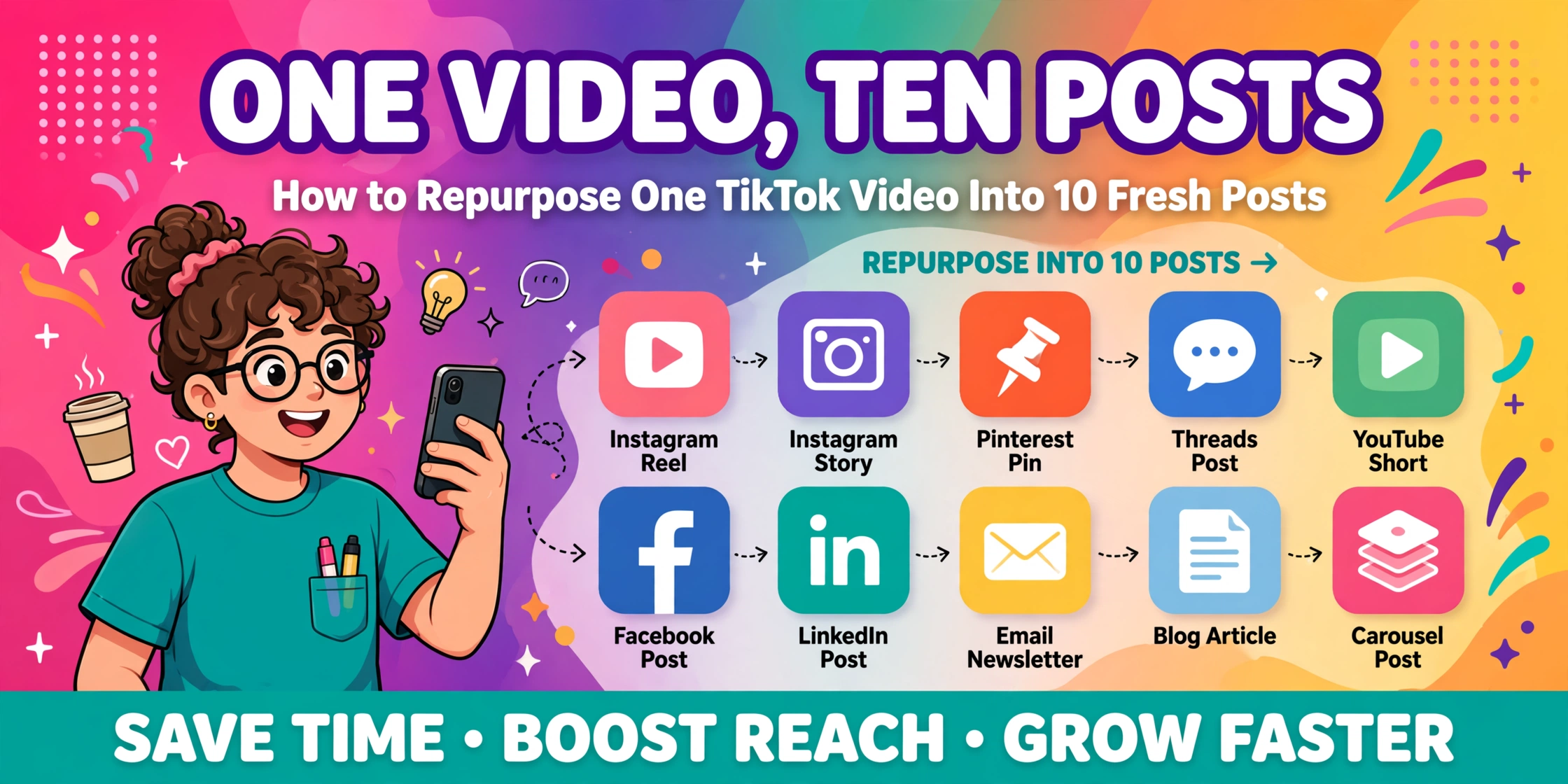
The One-Video, Ten-Post Method at a Glance
Here is the full breakdown of how a single well-made video becomes ten pieces of content without reshooting anything:
| Post | Platform | What Changes | Why It Works |
|---|---|---|---|
| 1 | TikTok | Original upload | Home base — the core audience lives here |
| 2 | Instagram Reels | Same video, new caption and hashtags | Different audience discovers it fresh |
| 3 | YouTube Shorts | Same video, punchier title | Searchable forever, slow-burn discovery |
| 4 | Same video, relatable status-style caption | Family and older audiences engage heavily | |
| 5 | WhatsApp Status | First 30 seconds trimmed | Personal network shares it forward |
| 6 | Snapchat Spotlight | Vertical crop, no text overlays | Bonus reach with minimal extra effort |
| 7 | Photo carousel | Best frames as stills | Feeds the algorithm without new footage |
| 8 | Voice-over version | New narration over the same clips | Fresh watch-through, same footage |
| 9 | Behind-the-scenes cut | Bloopers and outtakes | Humanizes the creator, builds loyalty |
| 10 | Compilation video | Combined with 2–3 older videos | One more upload, zero new filming |
1. Start With a Clean Original File
Every repurposing workflow begins the same way: the creator needs a clean copy of the video without platform watermarks. A watermark-free file can be edited, cropped, re-captioned, and re-exported freely. A video that still carries one platform’s watermark looks unprofessional when posted elsewhere, and some platforms quietly reduce the reach of videos that promote a competitor.
Smart creators make this a habit: the moment a video performs well, they save a clean copy to a folder on their phone or laptop. That file becomes raw material they can return to for weeks. A funny reaction video filmed in March can be recaptioned for a festival in June and sliced into a carousel in October. One filming session keeps paying off for months.
2. Post It Where Your Second Audience Lives
Most Pakistani creators start on one platform and treat the others as afterthoughts, but the audiences barely overlap. The people who watch Instagram Reels at night are often a different crowd from the TikTok scrollers on the same phone. Posting the same video to Instagram Reels, YouTube Shorts, and Facebook with a platform-appropriate caption means the same work gets seen by three or four separate audiences. The video stays the same; the wrapper changes to fit the room it is walking into.
3. Cut It Shorter — Much Shorter
A video that runs a full minute can usually be trimmed into two or three micro-clips, each with its own hook. The funniest few seconds become a standalone post. The surprising moment becomes a teaser with a comment-baiting caption. These cuts perform especially well where attention is thinnest, because they deliver the payoff before anyone scrolls past.
Creators who do this well keep an editing app next to their saved video file and knock out trims in minutes. Two cuts from one video can easily double the total reach of the original filming session.
4. Turn Stills Into Carousels
Some of the best-performing posts on Instagram right now are not videos at all — they are photo carousels. A single video contains dozens of usable frames: the reaction face, the before-and-after shot, the wide shot of the location. A handful of these frames, arranged in order, becomes a swipeable carousel that tells the story without sound.
Carousels reach the audience members who browse with sound off. For creators who film comedy, food, travel, or fashion, stills from a good video often outperform the video itself on engagement per view.
5. Re-Narrate It With a Voice-Over
A completely fresh way to reuse footage is to strip the original audio and record new narration over the same clips. A cooking video becomes a tips video. A street walk becomes a travel guide. The audience gets new information wrapped in familiar, proven visuals — a combination that tends to hold watch time well. This technique also lets creators fix a video that flopped the first time: sometimes the footage was great but the original script did not land.
6. Squeeze Out the Behind-the-Scenes Content
Audiences love seeing what happened around the video: the blooper, the setup, the friend laughing behind the camera. Creators who keep their outtakes have a free bonus post sitting on their phone after every shoot. Behind-the-scenes clips feel personal and honest, and they build the kind of loyalty that keeps viewers coming back. The smart move is to film a few seconds of the setup and wrap-up for every video — over a month, those scraps become a post that needs no script at all.
7. Build Compilations and Series
Once a creator has several saved videos on the same theme, compilations write themselves. Three old comedy sketches become a “best of” post. Four cooking clips become a recipe roundup. Compilations promise a lot of value in a single watch, and they take almost no new effort.
Series are the long game. A creator who posts “part one” of a story will find the audience asking for part two — and part two can be stitched together from footage that already exists. Each video in the series feeds the next one’s discovery.
8. Use Text Posts to Point Back to Video
Not every repurposed post needs to be a video. A well-written text post — the lesson from the video, the funniest line as a quote, a question the video raised — can drive curious readers back to the original clip. These short text companions turn one idea into a small content ecosystem instead of a single upload.
What Top Repurposers All Have in Common
Creators who master repurposing share a few habits. They organize their files — a simple folder per video, named clearly. They think in “content stacks” before filming: while shooting one video, they already know which trims, stills, and voice-over versions it will produce. And they respect each platform’s culture instead of dumping identical copies everywhere. A small caption tweak is the difference between a repost that flops and one that flies.
And they all follow one important rule: only repurpose your own content, or content you have permission to use. Downloading and re-uploading someone else’s video without their consent is not repurposing — it is theft, and platforms penalize it. Keep the machine running on your own originals.
FAQs
Is it okay to post the same video on TikTok, Instagram, and YouTube?
Yes — audiences on different platforms barely overlap, and each platform rewards native uploads. Just adjust the caption, hashtags, and title to fit each platform’s style instead of copy-pasting the exact same package.
How do creators save their videos without watermarks?
Most save a clean copy of their original file before uploading, or use a downloader tool on their own published videos. A watermark-free file can be edited and reposted anywhere without looking unprofessional.
How often should a creator repurpose versus film new content?
A common rhythm is filming two or three new videos a week and repurposing each into multiple posts. That keeps the feed active daily while the camera only rolls a few times.
What is the easiest first step into repurposing?
Start with cross-posting: take your best-performing video, save a clean copy, and upload it to one more platform with a fresh caption. That single move often doubles a video’s total views.
Should creators delete and repost a video that flopped?
A better option is to change the packaging — new first few seconds, new caption, new posting time. The footage may have been fine; the wrapper may have been the problem. Repurposing gives it a second life.
The Bottom Line
The creators who seem to be everywhere are usually not filming everywhere. They film once, save a clean copy, and work that file hard — across platforms, formats, and months.
If you want to start, begin with the foundation: keep a clean, watermark-free copy of every video you make. Tools like the TikTok Video Downloader make it easy to save your own published videos in good quality whenever you need the raw material. From there, one video really can become ten posts — and ten posts from a single filming session is how small creators start looking like big ones.
Note: Only download and repurpose videos you created yourself or have permission to use. Respect other creators’ work. On4t is not affiliated with or endorsed by TikTok.